

Introduction: Losing weight is relatively simple, but losing pure body fat while preserving your hard-earned muscle mass is an entirely different challenge. Many beginners fall into the trap of extreme calorie deprivation or hours of exhausting cardio, which only leads to muscle loss, constant fatigue, and a wrecked metabolism. If your goal is a lean, defined, and athletic physique, you need a smart, science-backed approach.
This comprehensive fat loss guide for beginners breaks down the exact mechanics of fat loss, offering a step-by-step roadmap tailored specifically to torch stubborn fat efficiently without starving.
1. The Energy Balance Equation: Mastering the Caloric Deficit
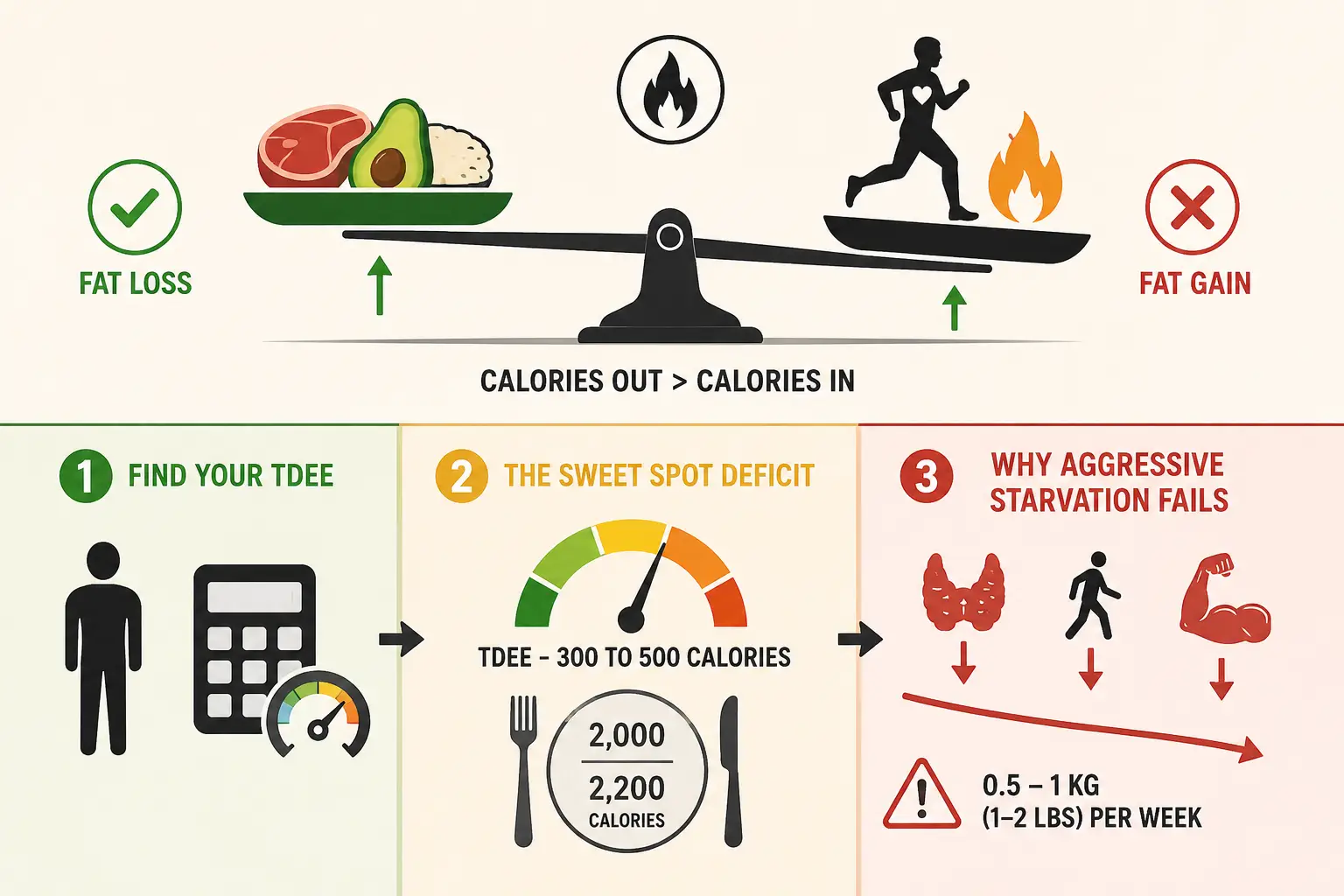
At the core of all fat reduction is the law of thermodynamics: you must expend more energy than you consume. This state is known as a caloric deficit. However, the size of your deficit dictates whether you lose fat or muscle.
How to Calculate and Manage Your Deficit:
- Find Your TDEE: Your Total Daily Energy Expenditure (TDEE) is the total number of calories your body burns in a day based on your height, weight, age, and activity level. Use an online calculator to find this baseline.
- The Sweet Spot Deficit: Subtract 300 to 500 calories from your TDEE maintenance level. If your maintenance is 2,500 calories, your fat loss targets should be 2,000 to 2,200 calories.
- Why Aggressive Starvation Fails: Dropping your calories drastically (like eating under 1,200 calories) forces the body into a protective mechanism. It slows down your thyroid output, decreases neat activity, and burns muscle tissue for survival. Aim for a healthy, steady fat loss rate of 0.5 to 1 kg (1-2 lbs) per week.
2. Macronutrient Distribution: Why Food Quality Matters
While a calorie deficit controls weight loss, your macronutrient breakdown (Protein, Carbohydrates, and Fats) determines what kind of weight you lose.
A. High Protein Intake (The Non-Negotiable)
When in an energy deficit, your body actively looks for tissue to break down for fuel. If protein is low, it strips away muscle.
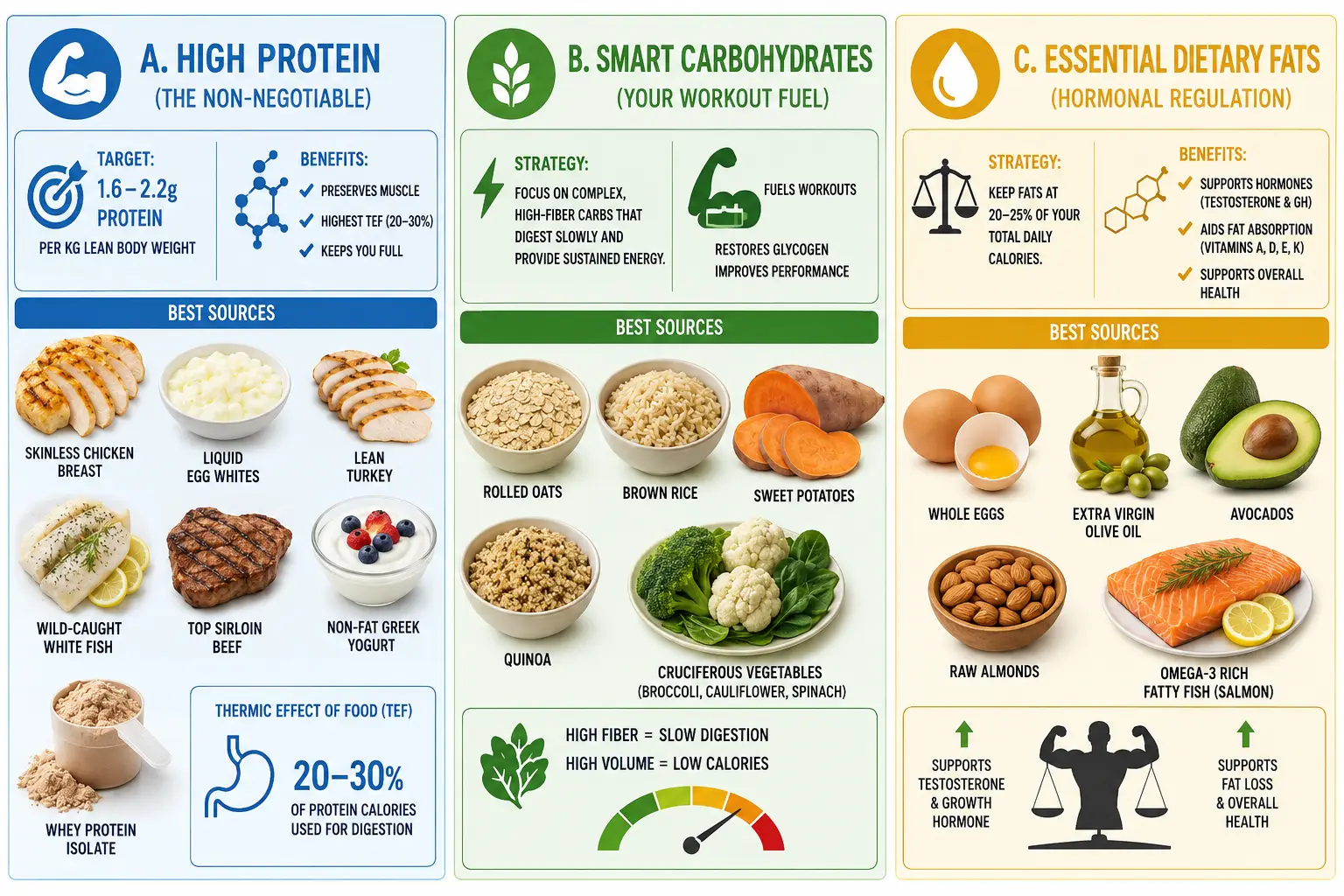
- The Target: Consume 1.6 to 2.2 grams of protein per kilogram of lean body weight daily.
- The Benefits: Protein triggers muscle protein synthesis, preventing atrophy. Furthermore, it has the highest Thermic Effect of Food (TEF). Your body expends roughly 20-30% of the calories consumed from protein just to break it down and digest it. It also keeps you full by suppressing the hunger hormone, ghrelin.
- Best Sources: Skinless chicken breast, liquid egg whites, lean turkey, wild-caught white fish, top sirloin beef, non-fat Greek yogurt, and high-quality whey protein isolate.
B. Smart Carbohydrates (Your Workout Fuel)
Carbs are not the enemy. They store glycogen in your muscles, giving you the strength to lift weights intensely.
- The Strategy: Focus on complex, high-fiber carbohydrates that digest slowly and provide sustained energy.
- Best Sources: Rolled oats, brown rice, sweet potatoes, quinoa, and cruciferous vegetables (broccoli, cauliflower, spinach) which provide massive volume with very few calories.
C. Essential Dietary Fats (Hormonal Regulation)
Cutting fats to zero is dangerous. Fats regulate vital fat-burning hormones like testosterone and growth hormone.
- The Strategy: Keep fats at roughly 20-25% of your total daily calories.
- Best Sources: Whole eggs, extra virgin olive oil, raw almonds, avocados, and natural omega-3 rich fatty fish like salmon.
3. Training Architecture: Lift Weights to Shape Your Body
A common beginner misconception is switching to high-repetition light weights or stopping weightlifting entirely during a fat-loss phase. This is a critical mistake. Lifting heavy weights provides the mechanical tension necessary to signal your nervous system to preserve muscle mass.
The Ultimate Cutting Workout Guidelines:
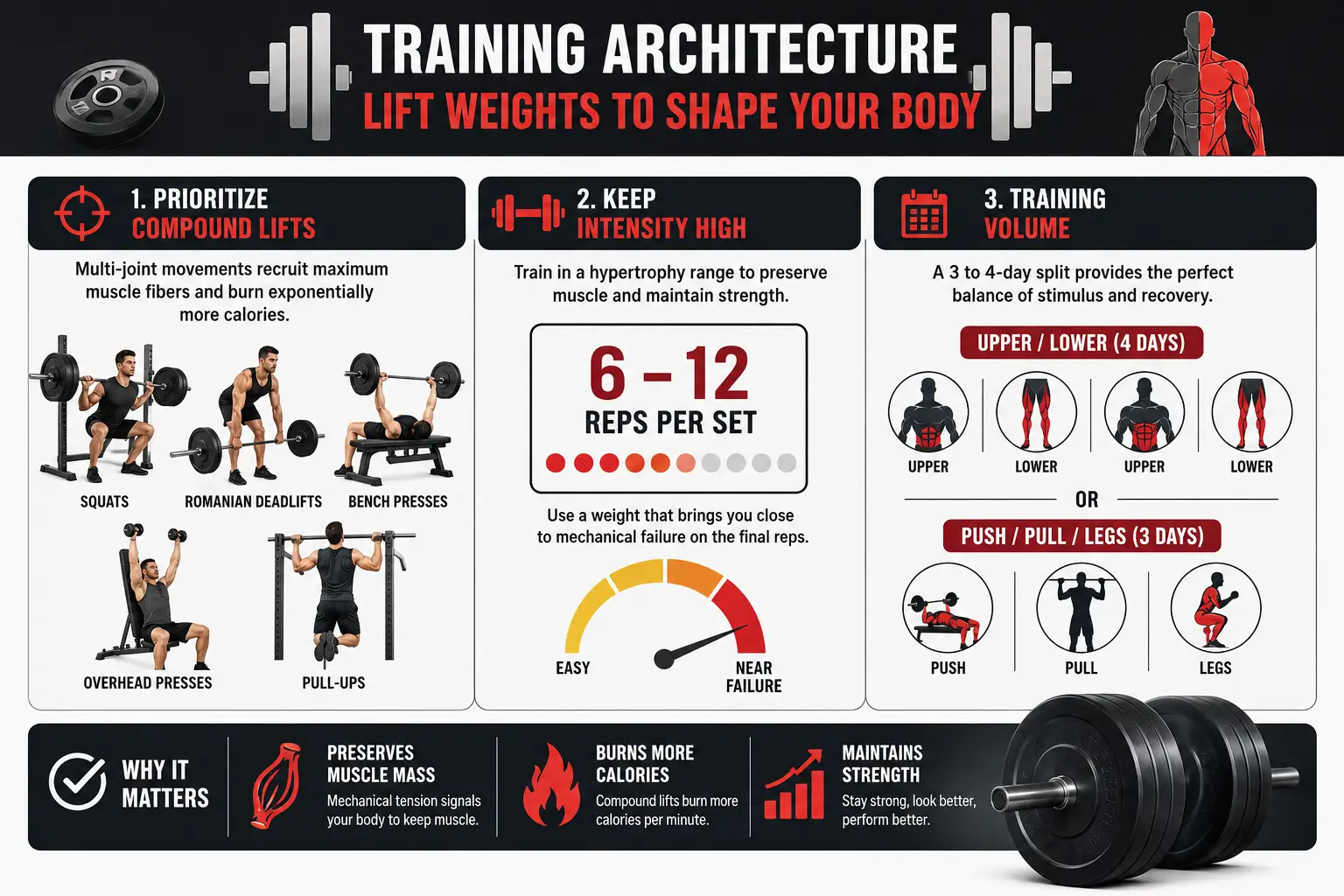
- Prioritize Compound Lifts: Your workout routine should revolve around multi-joint movements like Squats, Romanian Deadlifts, Bench Presses, Overhead Presses, and Pull-ups. These movements recruit maximum muscle fibers and burn exponentially more calories per minute than isolation movements.
- Keep Intensity High: Stick to a hypertrophy range of 6 to 12 repetitions per set, utilizing an weight that brings you close to mechanical failure on the final reps.
- Training Volume: A standard 3 to 4-day Upper/Lower or Push/Pull/Legs training split is highly effective for fat loss, providing ample time for muscle recovery.If your goal is building mass instead, check out our full workout plan for skinny guys.
4. Advanced Cardio Strategies: LISS vs. HIIT
Cardiovascular exercise is a highly effective tool to widen your caloric deficit gap without forcing you to starve your plate. To get the best results, you should combine two distinct types of cardio:
A. Low-Intensity Steady State (LISS)
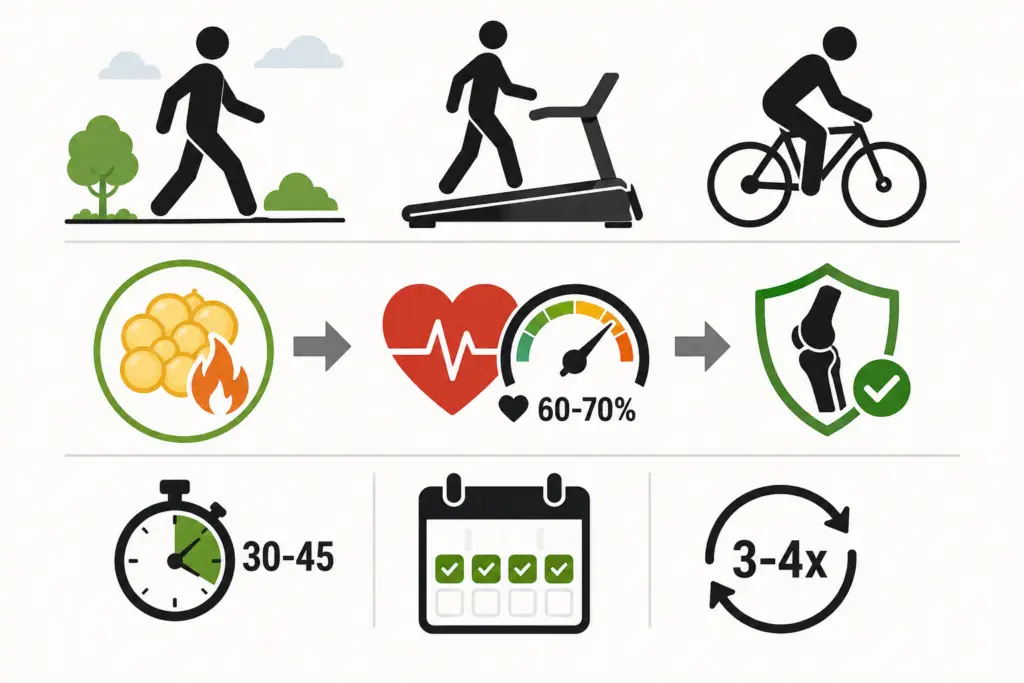
- What it is: Fasted brisk walking, incline treadmill walking, or casual cycling keeping your heart rate around 60-70% of your maximum.
- Why it works: LISS primarily utilizes stored fatty acids as a direct fuel source. It is incredibly low impact, meaning it won’t interfere with your leg recovery from weight training or spike your appetite.
- Prescription: 30 to 45 minutes, 3-4 times a week.
B. High-Intensity Interval Training (HIIT)
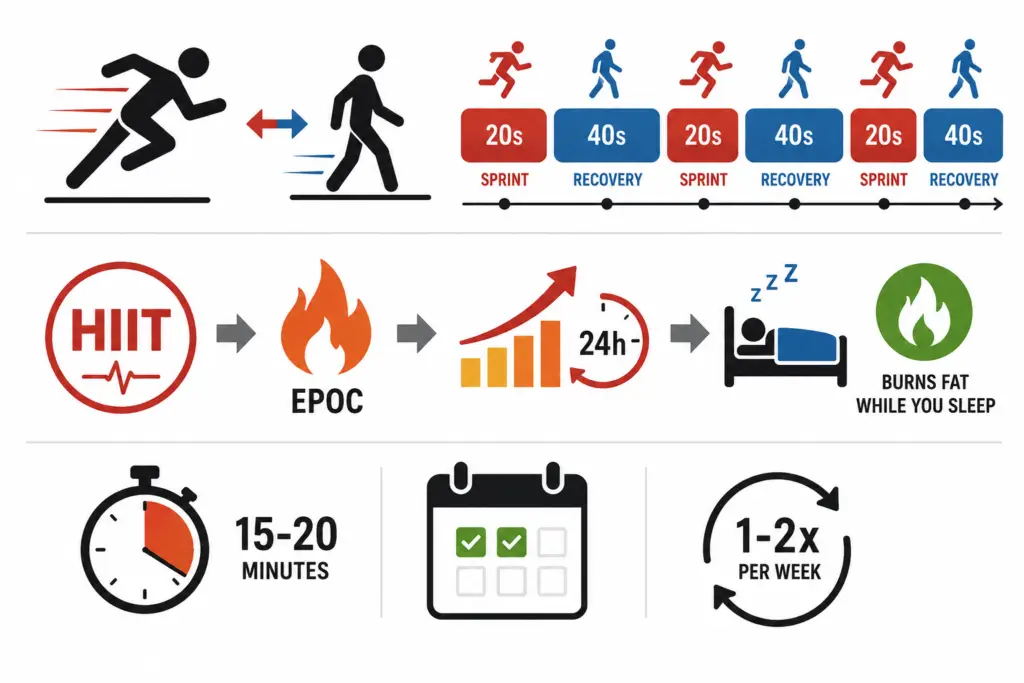
- What it is: Alternating short bursts of max-effort sprinting with recovery periods (e.g., 20 seconds full sprint, 40 seconds slow walk).
- Why it works: HIIT triggers the EPOC effect (Excess Post-Exercise Oxygen Consumption). Your metabolism remains significantly elevated for up to 24 hours after the workout is over, burning fat while you sleep.
- Prescription: 15 to 20 minutes maximum, 1-2 times a week.
5. Overcoming Plateaus and Weight Fluctuations
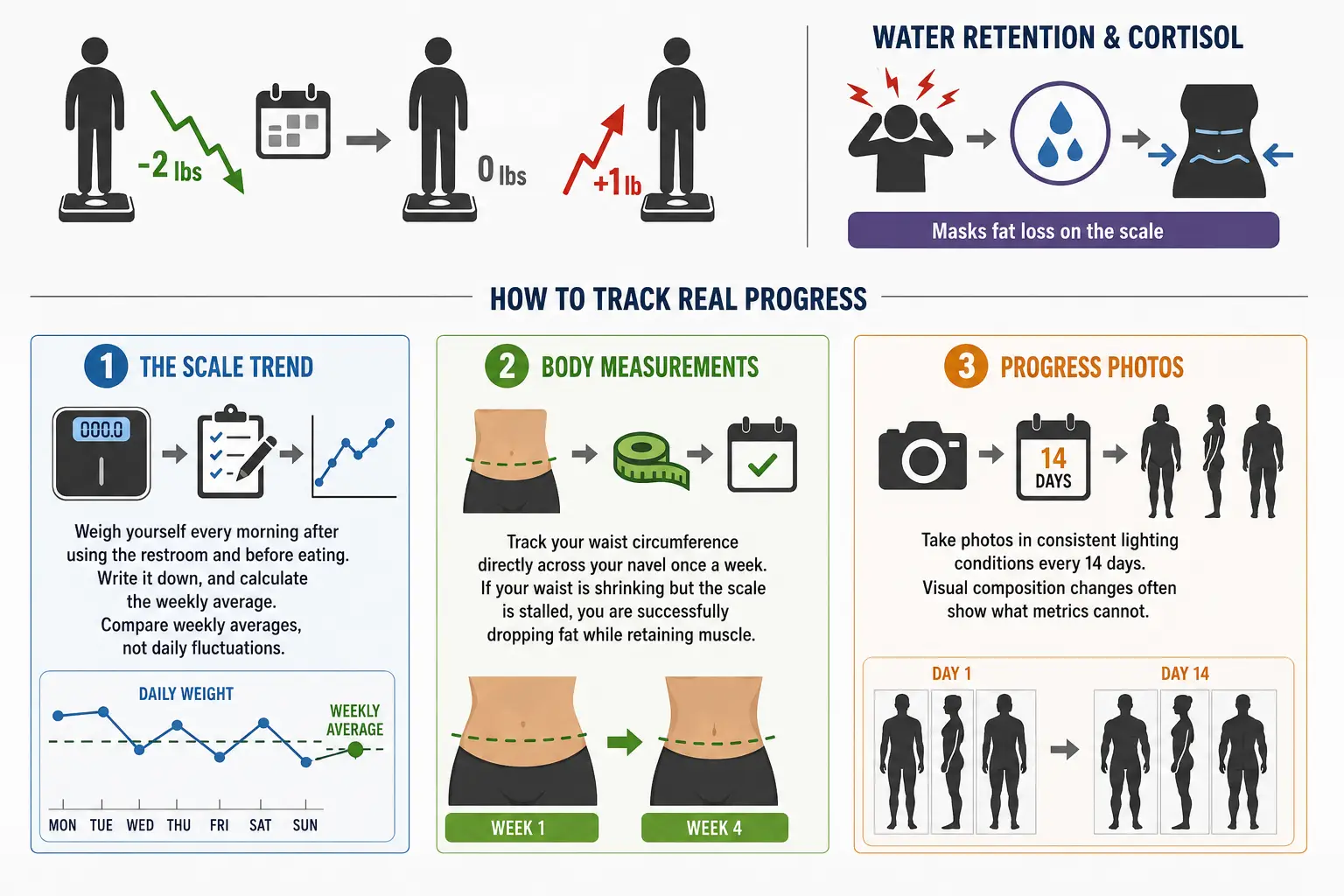
Weight loss is never linear. You might notice your weight drops by 2 lbs one week, stays completely flat the next, or even goes up slightly. This is normal.
Understanding Water Retention and Cortisol:
When your body is under the stress of a calorie deficit and intense gym workouts, it releases a hormone called cortisol. High cortisol causes your cells to retain temporary subcutaneous water, which completely masks your fat loss on the bathroom scale.
How to Track Real Progress:
- The Scale Trend: Weigh yourself every morning after using the restroom and before eating. Write it down, and calculate the weekly average. Compare weekly averages, not daily fluctuations.
- Body Measurements: Track your waist circumference directly across your navel once a week. If your waist is shrinking but the scale is stalled, you are successfully dropping fat while retaining muscle.
- Progress Photos: Take photos in consistent lighting conditions every 14 days. Visual composition changes often show what metrics cannot.
Conclusion: Consistency Beats Perfection
Fat loss is a marathon, not a 100-meter dash. Adhering to a moderate, enjoyable caloric deficit paired with disciplined weight training will yield dramatic physical changes over a 12-week period. Focus on building habits you can maintain long-term, protect your muscle at all costs, and let science handle the rest.