

In the fitness and bodybuilding world, you’ve likely heard the traditional golden rule: “You cannot build muscle and lose fat at the same time.” For decades, the consensus was that you had to choose between a “bulking” phase—eating in a surplus to gain muscle (along with unavoidable fat)—or a “cutting” phase—starving yourself to burn fat while risking the loss of hard-earned muscle tissue.
However, with the evolution of modern sports science and nutrition, Body Recomposition (or “Maingaining”) has emerged as one of the most highly searched and implemented strategies by elite athletes. This comprehensive guide will reveal the biological mechanisms, advanced nutritional protocols, and exact training architecture required to achieve this “impossible” equation.
1. What is Body Recomposition? The Biological Mechanism
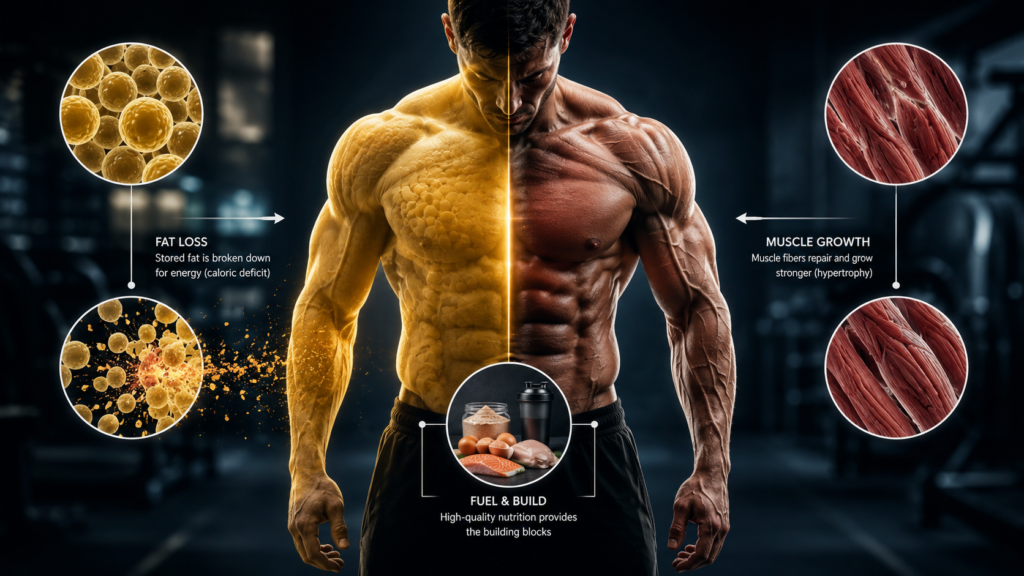
Body recomposition is not merely about losing weight; it is the process of completely altering your physical makeup. The goal is to increase lean muscle mass while simultaneously decreasing your body fat percentage. Your scale weight might remain relatively stable, but your physique will transform drastically.
The Science Behind It: The human body is not a closed on/off system. Muscle and fat are entirely different tissues that respond to different stimuli:
- Fat Loss occurs when the body is in a systemic caloric deficit.
- Muscle Growth (Hypertrophy) occurs when there is a strong mechanical stimulus (resistance training) combined with the necessary building blocks (high-quality protein).
Therefore, your body can literally utilize the stored energy in your fat cells to fund the muscle protein synthesis process, provided that your nutrition and training are calibrated with absolute precision.
2. Who Can Benefit Most from This Strategy?
While body recomposition is possible for almost anyone, four specific groups of people experience the most rapid and dramatic results:
- The Beginners (Newbie Gains): Individuals completely new to resistance training have hyper-responsive muscle fibers that will grow even in a caloric deficit.
- The Returners (Muscle Memory): Athletes who have taken a long break from training can quickly regain lost muscle tissue while burning fat simultaneously.
- Higher Body Fat Individuals: Those with excess adipose tissue have an abundant internal energy reservoir to fuel muscle growth without needing an external caloric surplus.
- Sub-optimal Trainees: People who have been going to the gym for months but lacked a structured program, progressive overload, or proper diet tracking.
3. The First Pillar: Advanced Nutrition Protocol
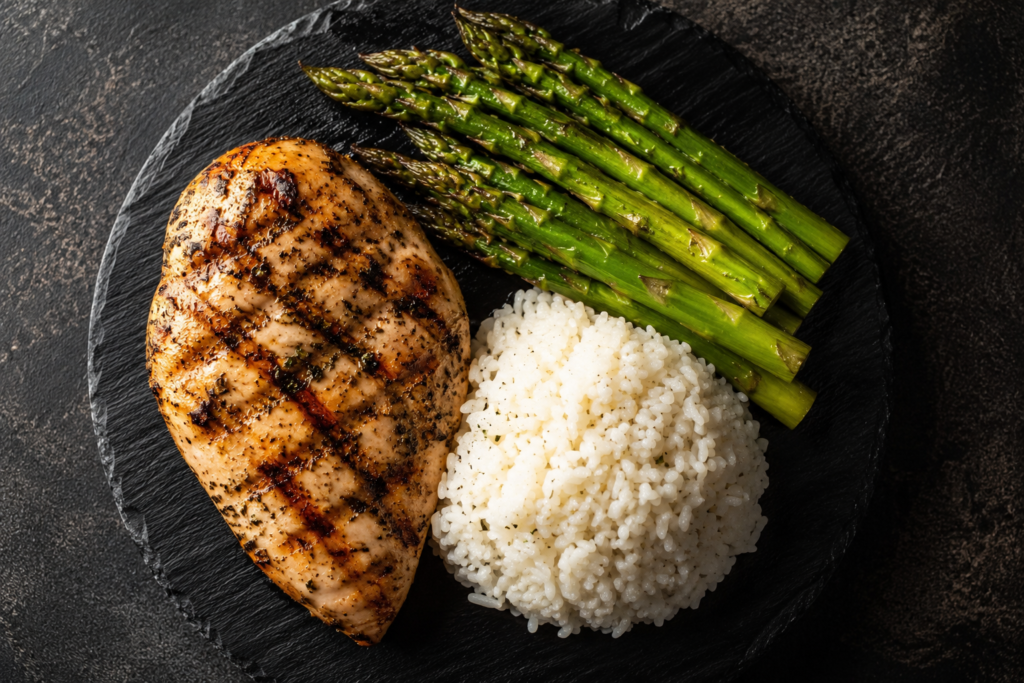
You cannot out-train a bad diet, nor can you bypass the laws of thermodynamics, but you can optimize them for recomposition.
A. The Slight Caloric Deficit
Unlike a traditional, aggressive “cut” that requires a 500-1000 calorie deficit, body recomposition demands a very slight deficit—typically only 200 to 300 calories below your daily maintenance level. This micro-deficit is just enough to trigger fat oxidation without pushing the body into a catabolic (muscle-wasting) state.
B. Protein Prioritization
To achieve recomposition, your protein intake must be exceptionally high. Modern sports science recommends consuming between 2.2 to 2.6 grams of protein per kilogram of lean body weight. High protein serves two vital functions:
- It provides the amino acids necessary to trigger the mTOR pathway for muscle repair and growth.
- It has a high Thermic Effect of Food (TEF), meaning your body burns more calories simply by digesting it.
C. Carbohydrate Cycling
An advanced strategy involving higher carbohydrate intake on heavy training days (to fuel performance and replenish glycogen) and drastically lower intake on rest or cardio days (to maximize insulin sensitivity and fat burning).
4. The Second Pillar: Training Architecture
Cardio alone will not build an impressive physique, and random workouts will not force your body to recompose. To signal your body to retain and build muscle while in a deficit, your training must be structured, intense, and heavily reliant on Progressive Overload.
Here is a scientifically optimized Upper/Lower split designed to stimulate muscle protein synthesis twice a week per muscle group:
| Day | Focus | Core Exercises | Sets & Reps |
| Day 1 | Upper Body (Heavy/Strength) | Bench Press, Barbell Row, Overhead Press, Pull-ups | 4 Sets / 5-8 Reps |
| Day 2 | Lower Body (Heavy/Strength) | Squats, Romanian Deadlifts (RDL), Lunges, Calves | 4 Sets / 6-8 Reps |
| Day 3 | Active Recovery | Zone 2 Cardio (Brisk Walk / Cycling) | 30-45 Minutes |
| Day 4 | Upper Body (Hypertrophy) | Incline Dumbbell Press, Cable Rows, Lateral Raises, Arms | 3 Sets / 10-15 Reps |
| Day 5 | Lower Body (Hypertrophy) | Leg Press, Leg Extensions, Hamstring Curls | 3 Sets / 12-20 Reps |
| Day 6 | HIIT & Core | Rowing Machine Sprints + Core Work | 20 Mins HIIT / 15 Mins Core |
| Day 7 | Full Rest | Stretching / Yoga / Complete Recovery | – |
5. Cardio: The Double-Edged Sword
The most common mistake when attempting to lose fat is overdoing cardiovascular exercise. Excessive cardio spikes cortisol levels, which can lead to muscle breakdown for fuel. The secret is blending two types of cardio intelligently:
- Zone 2 Cardio: Steady-state activities like incline treadmill walking that burn fat directly without taxing your central nervous system or hindering muscle recovery.
- High-Intensity Interval Training (HIIT): Implemented once a week to boost your basal metabolic rate and cardiovascular health, ideally separated from heavy lifting sessions.
6. The Third Pillar: Sleep and Recovery
You can train like a professional and eat with surgical precision, but if your sleep quality is poor, recomposition will not happen.
- Human Growth Hormone (HGH): The vast majority of natural HGH is released during deep sleep phases, which is essential for fat burning and cellular regeneration.
- Insulin Sensitivity: Sleep deprivation blunts insulin sensitivity, causing your body to store carbohydrates as fat rather than shuttling them into muscles as glycogen. Aim for 7 to 9 hours of uninterrupted sleep in a dark, cool environment.
7. Evidence-Based Supplements (That Actually Work)
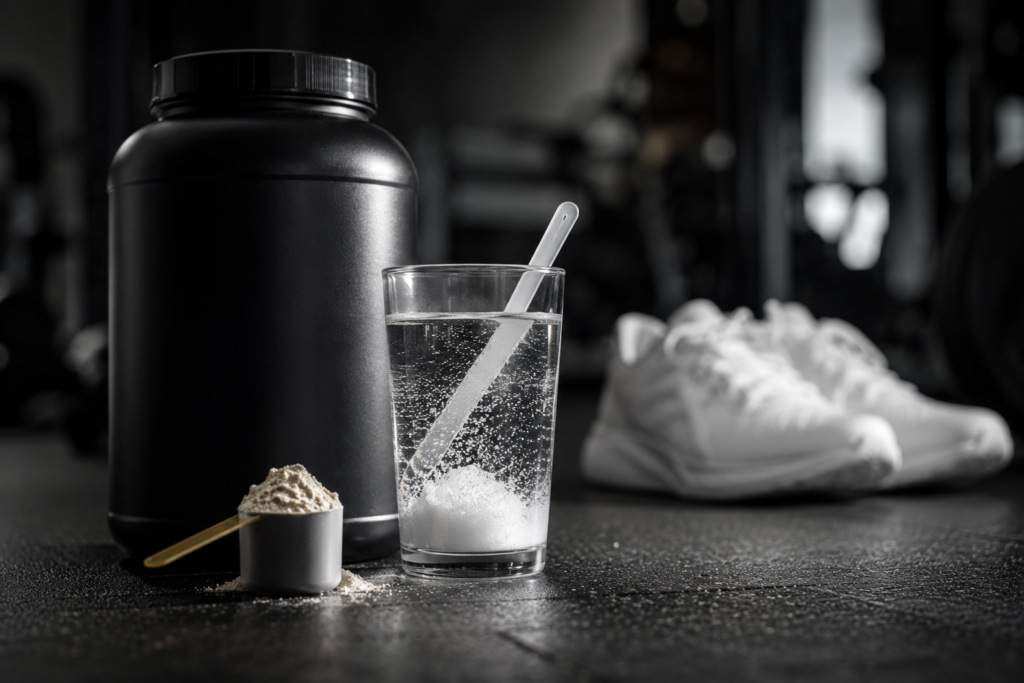
The supplement industry is filled with snake oil, but for body recomposition, these three are scientifically proven:
- Creatine Monohydrate: Beyond volumizing muscle cells with water, creatine significantly improves athletic performance and delays fatigue (5 grams daily).
- Whey Protein Isolate: A rapid, pure, and low-calorie method to hit your high daily protein target.
- Caffeine (Pre-workout): Increases neurological focus and mobilizes free fatty acids to be used as fuel during your workout.
8. Common Mistakes to Avoid
- Relying Solely on the Scale: The scale cannot differentiate between muscle, fat, and water. Your weight might stay identical while your waist shrinks and your arms grow. Use a measuring tape and take weekly photos in consistent lighting.
- Muscle Confusion: Muscles do not need to be “surprised” by changing workouts every week; they need progressive overload on the same core lifts to be forced to adapt and grow.
- Fearing Carbohydrates: Carbs are your primary fuel source for lifting heavy. Heavier lifting equals more muscle, and more muscle equals a faster, fat-burning metabolism around the clock.
The Bottom Line
Body recomposition demands patience and absolute discipline. It is a slower process than a traditional bulk or cut, but it is far more sustainable, healthier, and guarantees an impressive, athletic physique year-round without the need for extreme weight fluctuations.
Calibrate your calories, elevate your protein, train with intensity, prioritize recovery, and watch the ultimate physical transformation unfold in the mirror.